
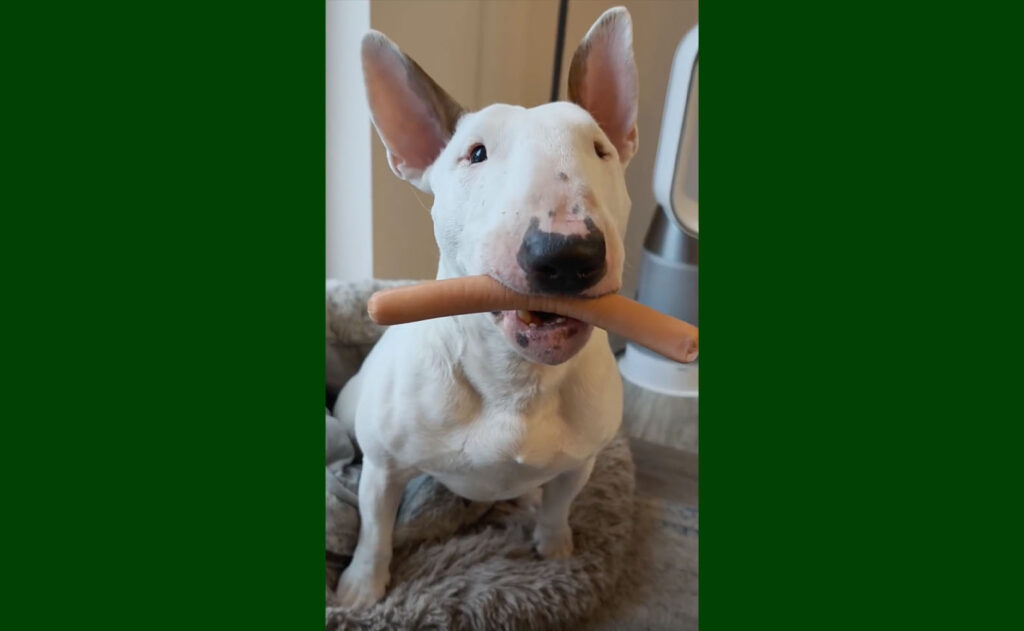
What happens in a dog’s brain when it practices self-control?
The sausage is within reach of the dog’s mouth. The dog’s brain already knows the reward is close – and activates the dopamine system. This is not the signal “this is tasty.” It’s the signal “I really want this.”
Dopamine triggers the urge to act. Glutamate amplifies arousal and the impulse to move. At this moment, the nervous system is in a state of high activation.
And this is exactly when – thanks to training – the prefrontal cortex becomes active. It is responsible for inhibiting reactions and remembering rules. The dog is not just “holding the sausage”. He is restraining a natural impulse.
It’s a neurological effort.
Why is this important?
1. Self-control is a specific set of connections in the brain.
Regular practice of impulse inhibition strengthens the neural networks responsible for regulation. This translates into everyday situations: reacting to stimuli outdoors, a visit to the vet, or meeting another dog.
This is not a trick. It’s training for the nervous system.
2. Balance of arousal
Glutamate stimulates.
GABA inhibits.
A healthy nervous system is a balance between these two processes. Working on self-control teaches the dog to function under tension without losing stability.
3. Neuroplasticity in practice
In dogs with neurological deficits, this process can be more difficult. The brain has to build alternative pathways for processing information. This requires time, patience, and precise guidance during training sessions.
But that’s exactly why the results are so valuable.
Why is a dog tired after such a session?
Because its brain was working intensely.
The prefrontal cortex generates inhibitory signals, which consumes energy. A dog’s brain, although small, uses a significant portion of the body’s energy resources. After a few minutes of intense work, fatigue, yawning, or a drop in concentration may appear.
That’s why self-control sessions should be short – 4–5 minutes is more than enough.
The goal is not frustration, but regulation.
What does this mean for you as a caregiver?
Self-control training is not a display of skills.
It’s building psychological resilience.
If you want to work on your dog’s regulation in a conscious way, without overloading its nervous system – I invite you to a consultation.